Decentralised Water and Waste Engineering

Make More of Water. Recover Value from Waste.

Vaari Nirvana treats sewage, faecal sludge and effluent where they are produced, conserves fresh water, restores lakes and rivers, and recovers value from waste. Each system is sized to measured flows, built with local teams and maintained after handover.

On the Ground

Working in Meghalaya Today.

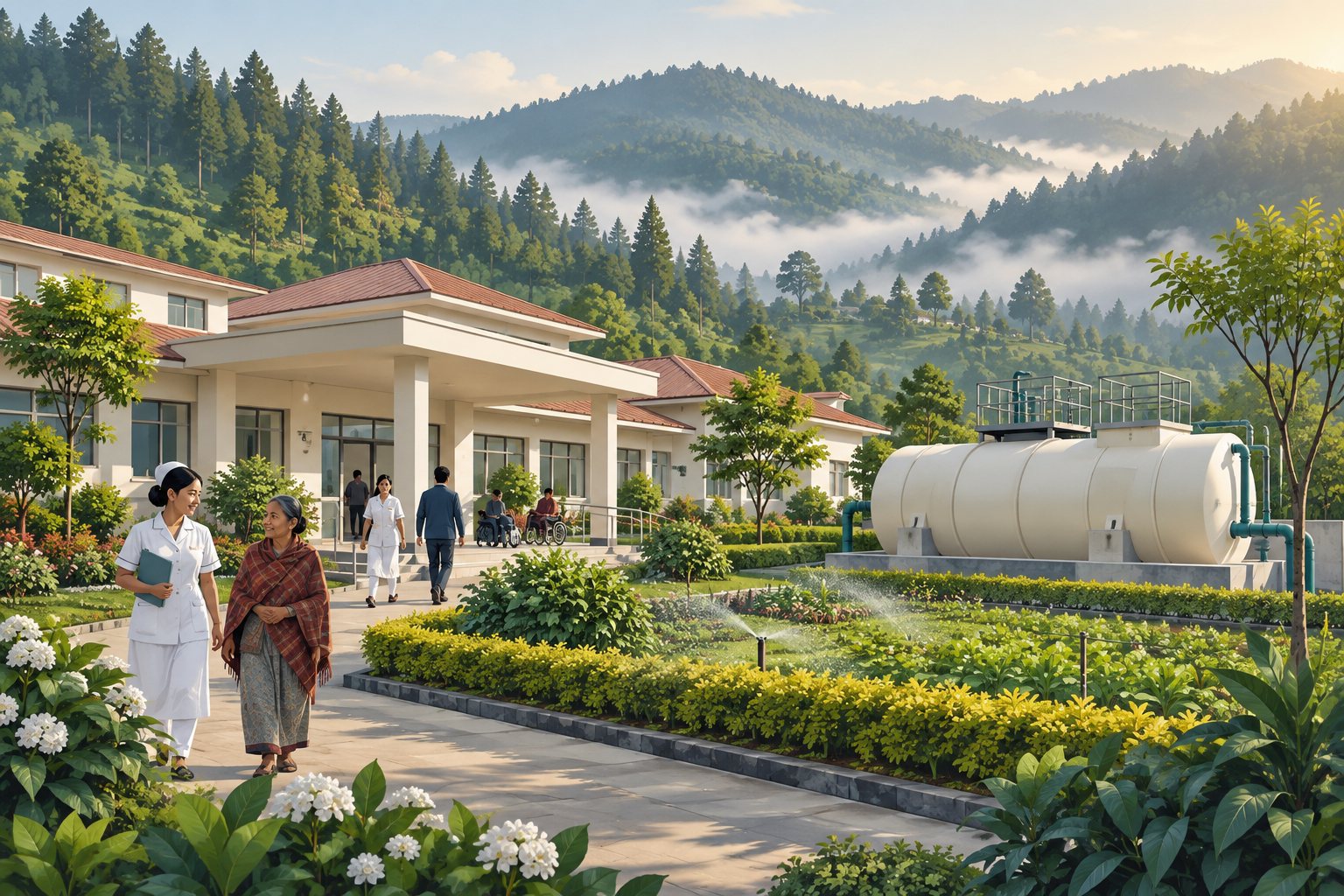
Our first plant treats a hospital's sewage in Baghmara. A sludge treatment plant for Ampati is in development.

Operational

Civil Hospital, Baghmara

Read the Project

Two 25 KLD EcoTreat units treat the hospital's sewage on its own grounds, for the Health and Family Welfare Department, Government of Meghalaya. Treated water was trialled for toilet flushing in June 2026.

Location
South Garo Hills, Meghalaya
Capacity
2 × 25 KLD (50 KLD)
Commissioned
June 2026
Our role
Site assessment, civil works, supply, installation, commissioning and operator training
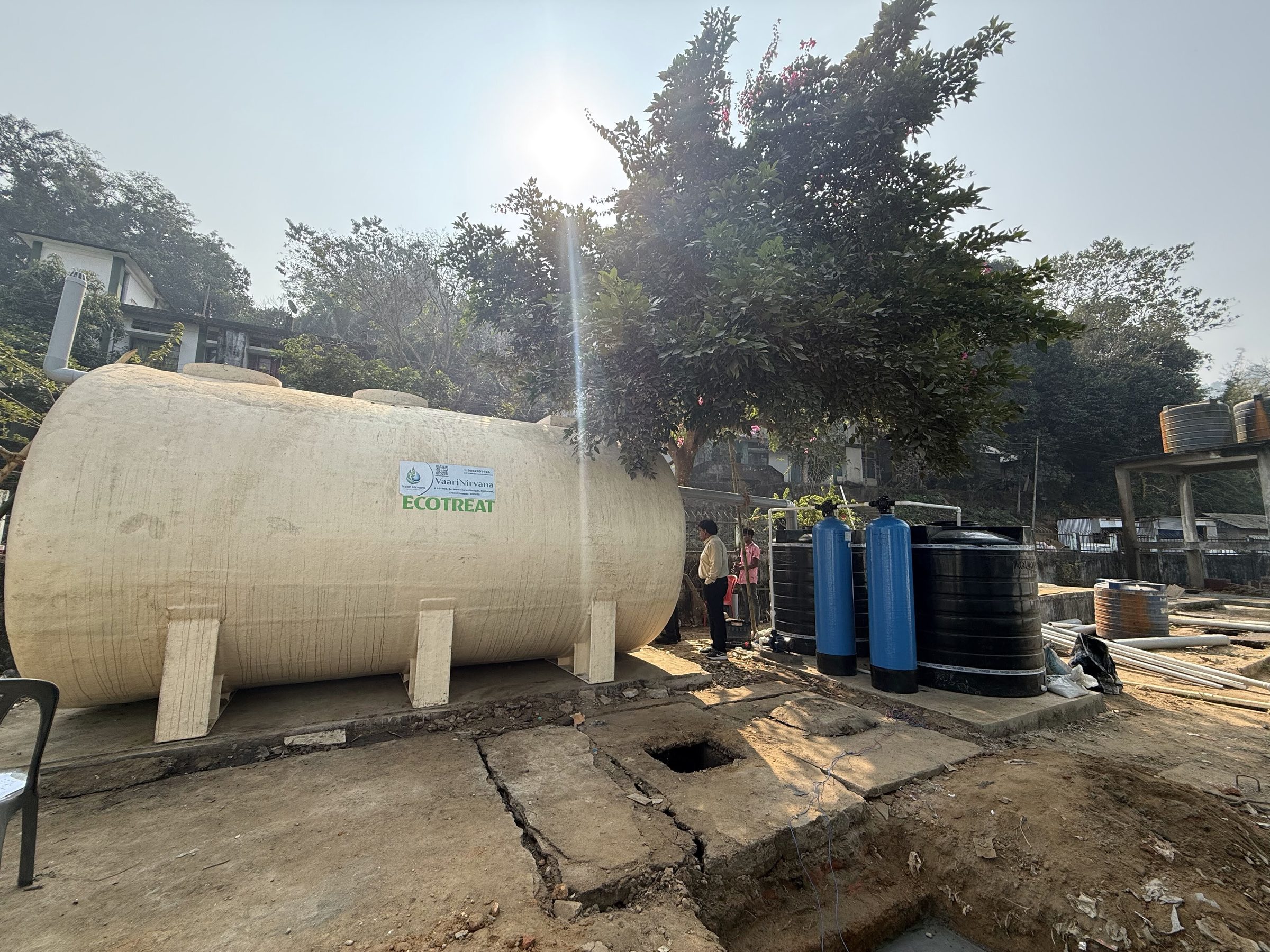
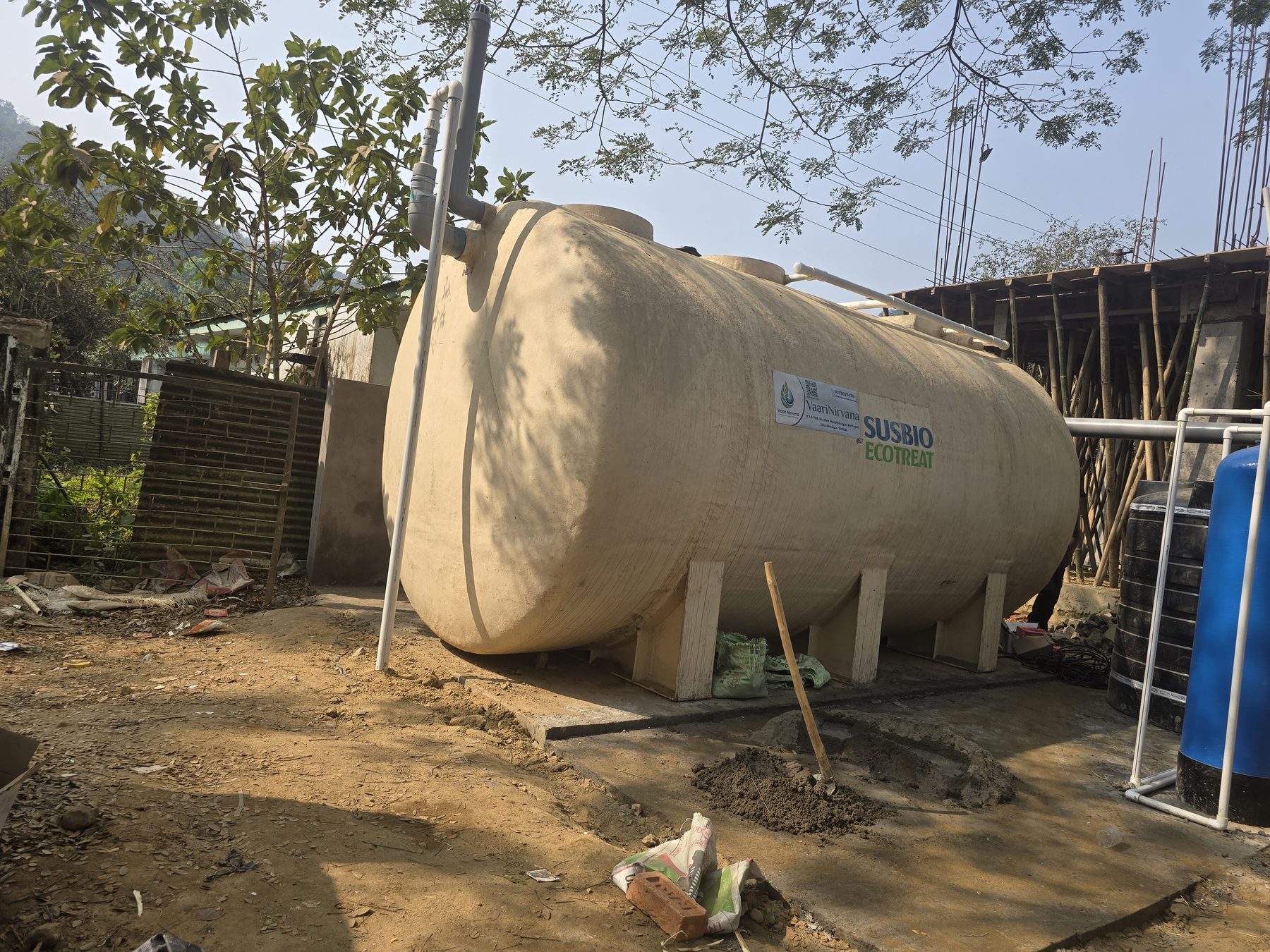
The EcoTreat plant at Baghmara, installed beside the hospital.
The installed plant
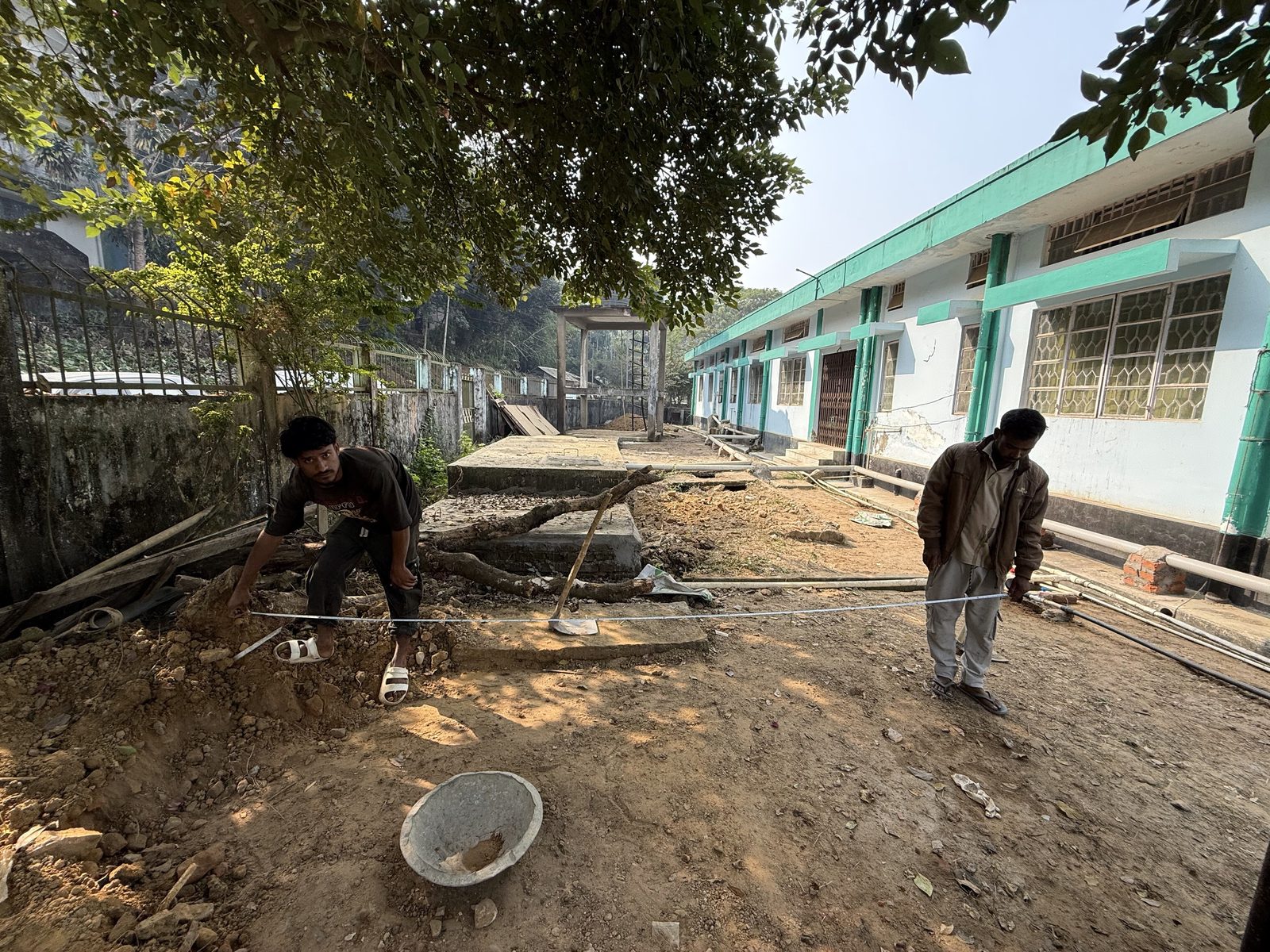
Marking out the plant's position before excavation.
Marking out the site
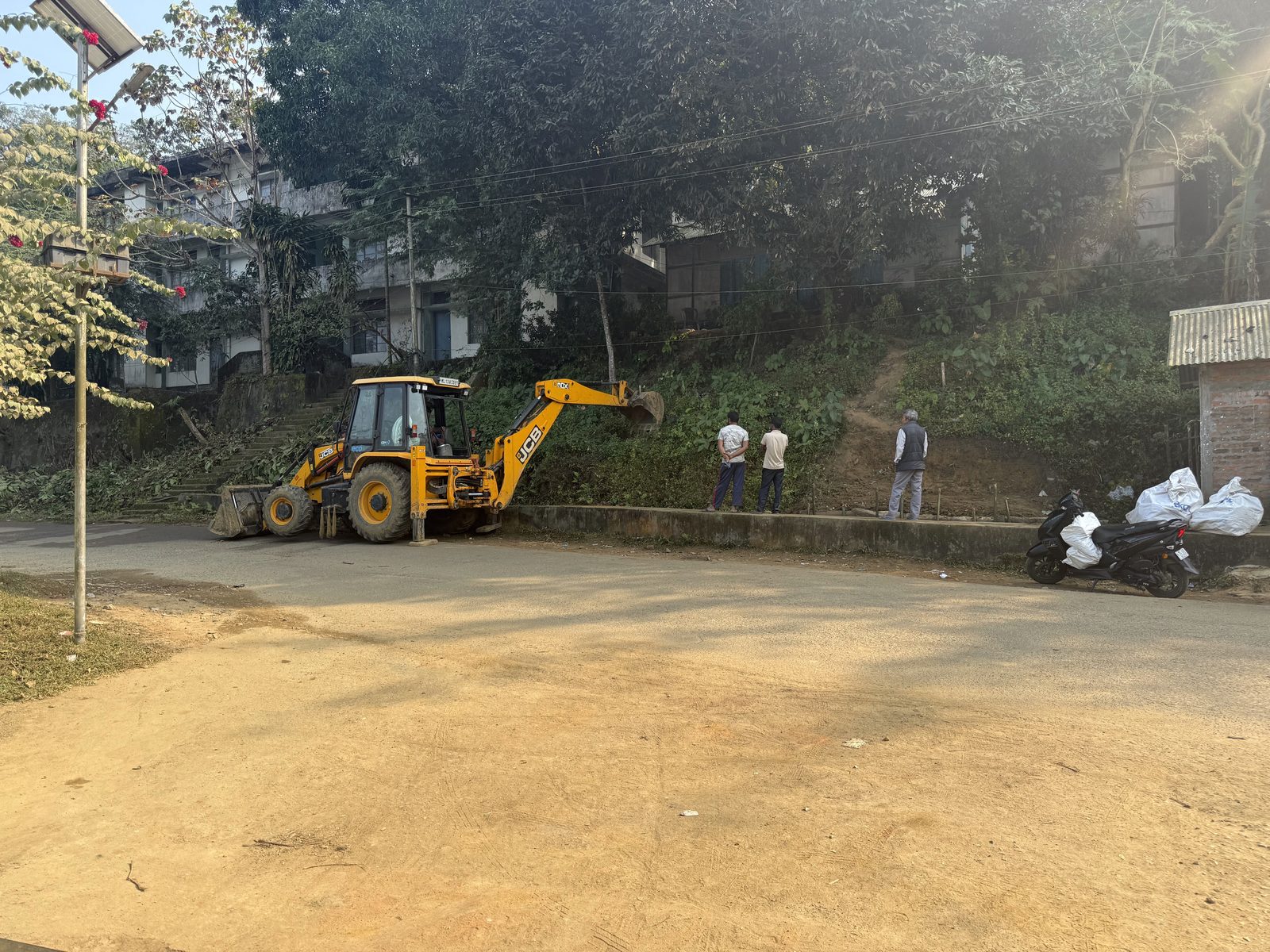
Excavation for the plant.
Excavation
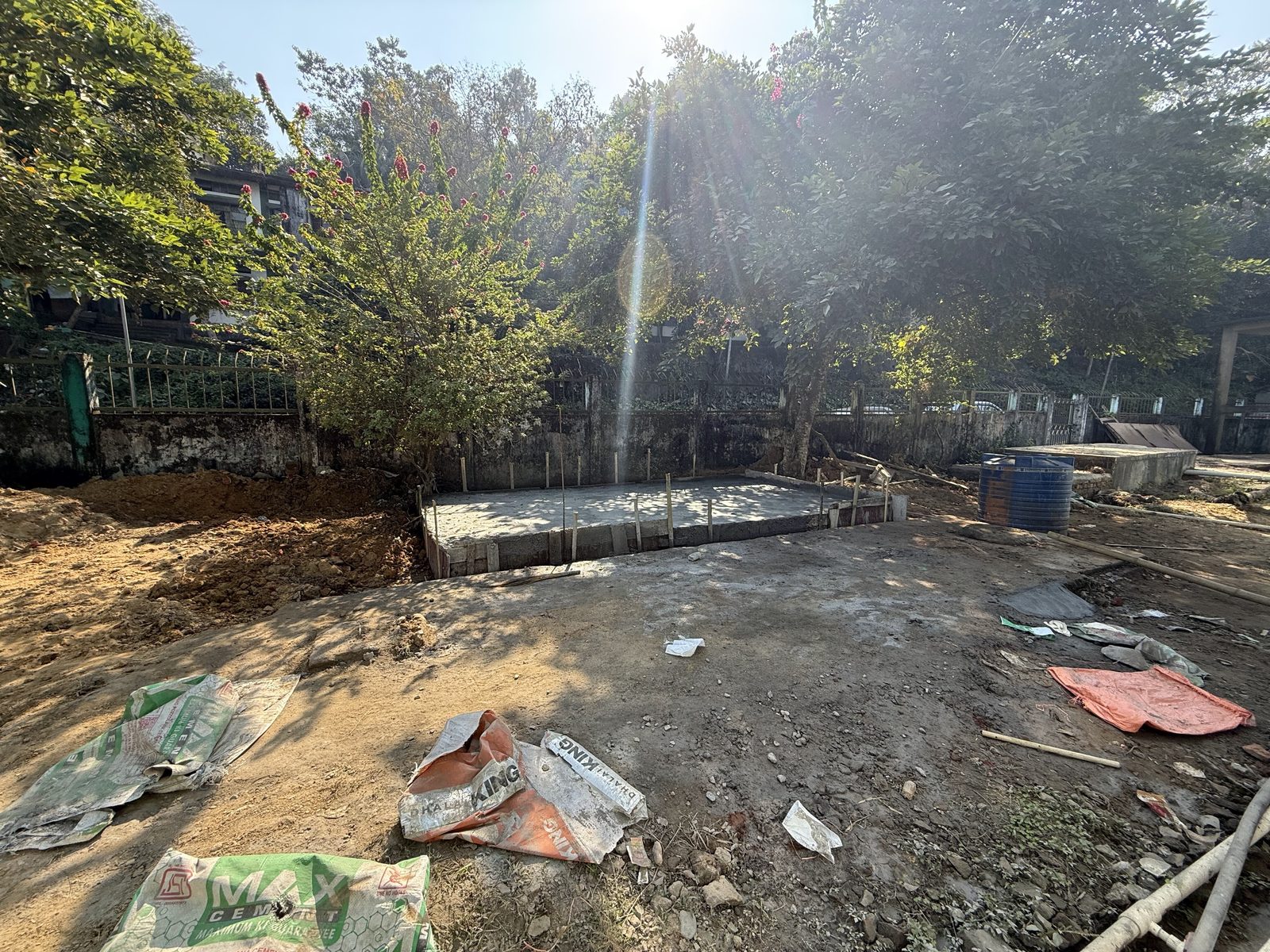
The concrete base slab prepared for the tank.
Base slab
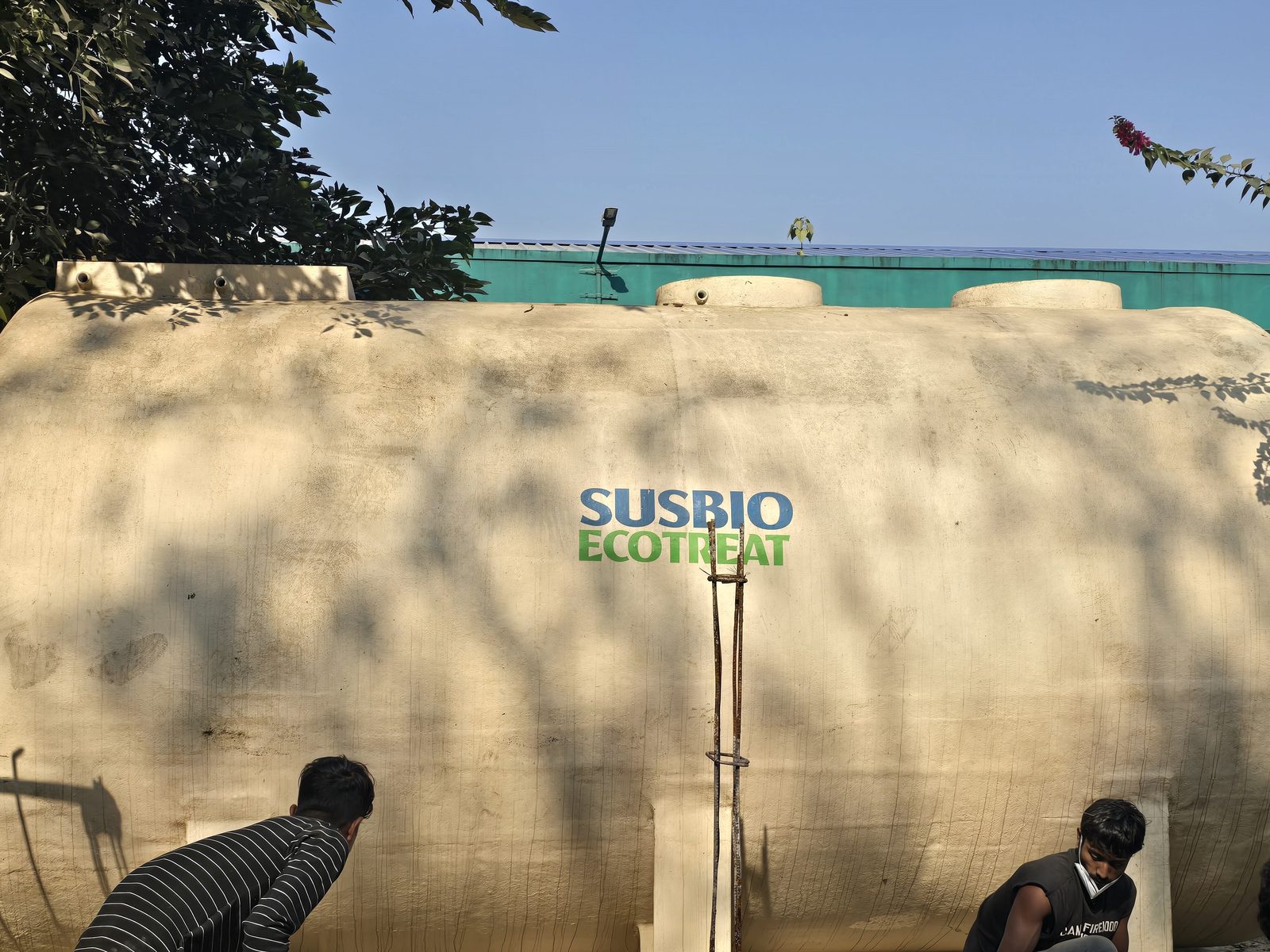
The team fixing the tank in place.
Fixing the tank
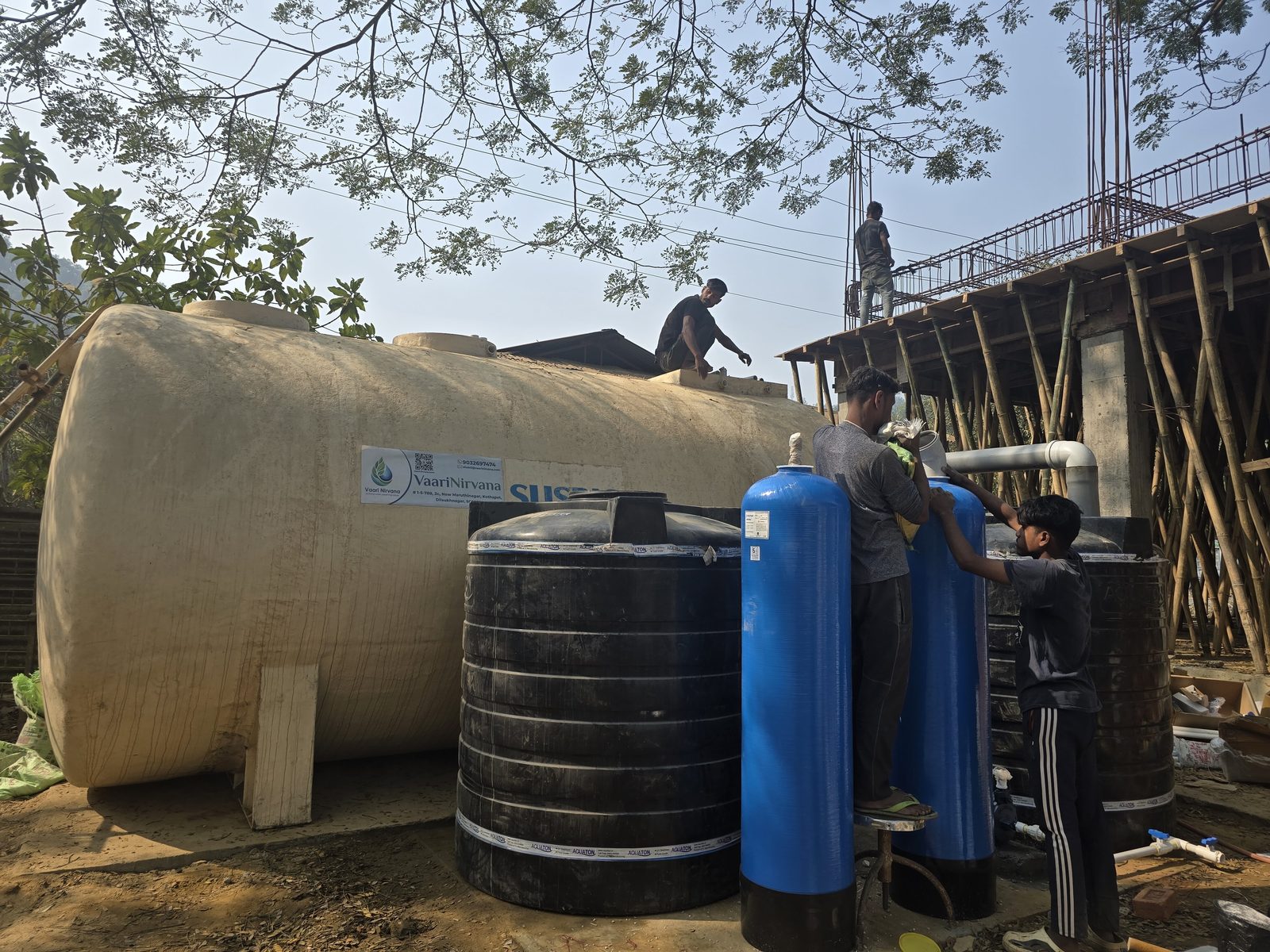
Technicians installing the pressure filters.
Installing the filters
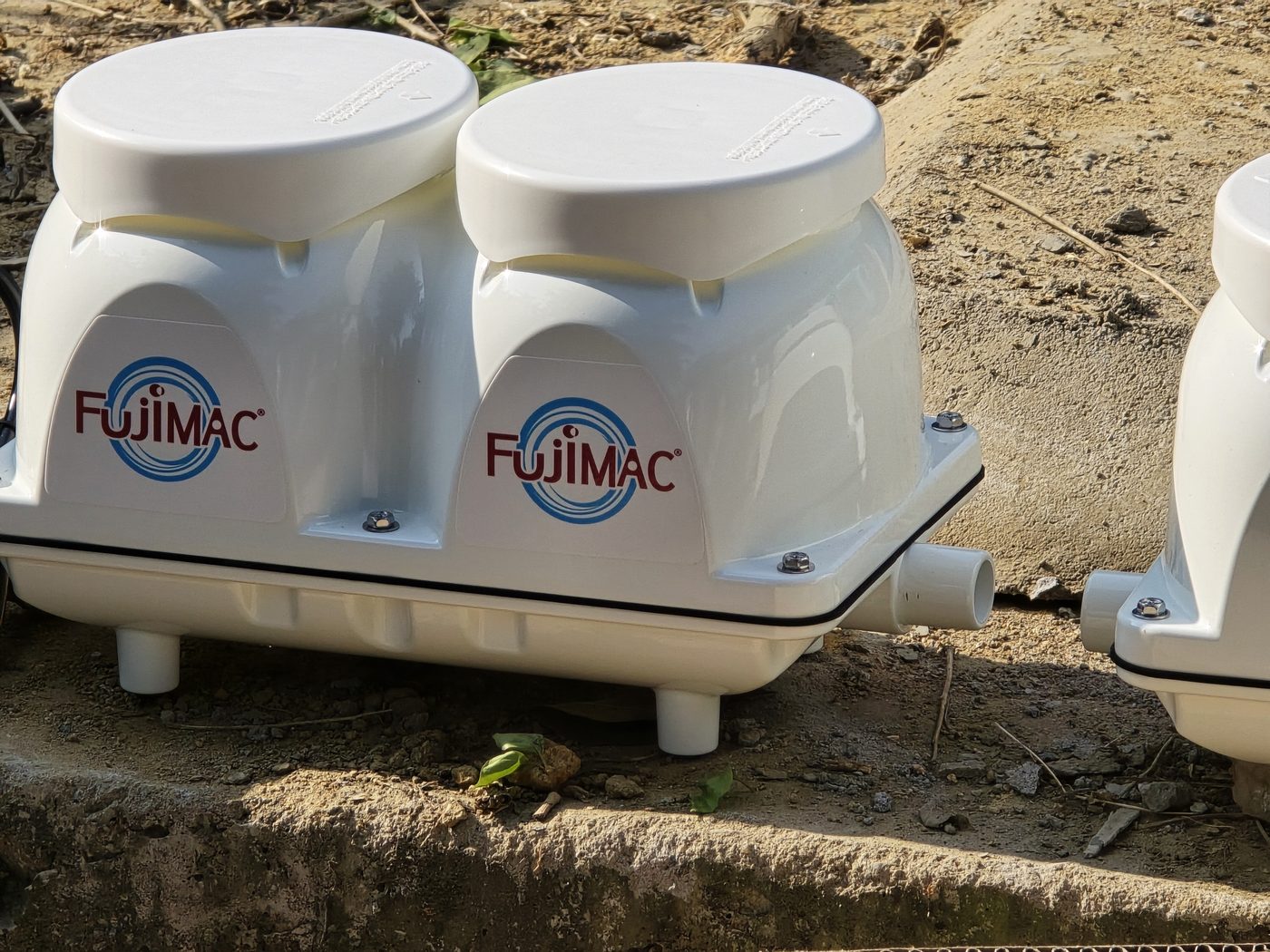
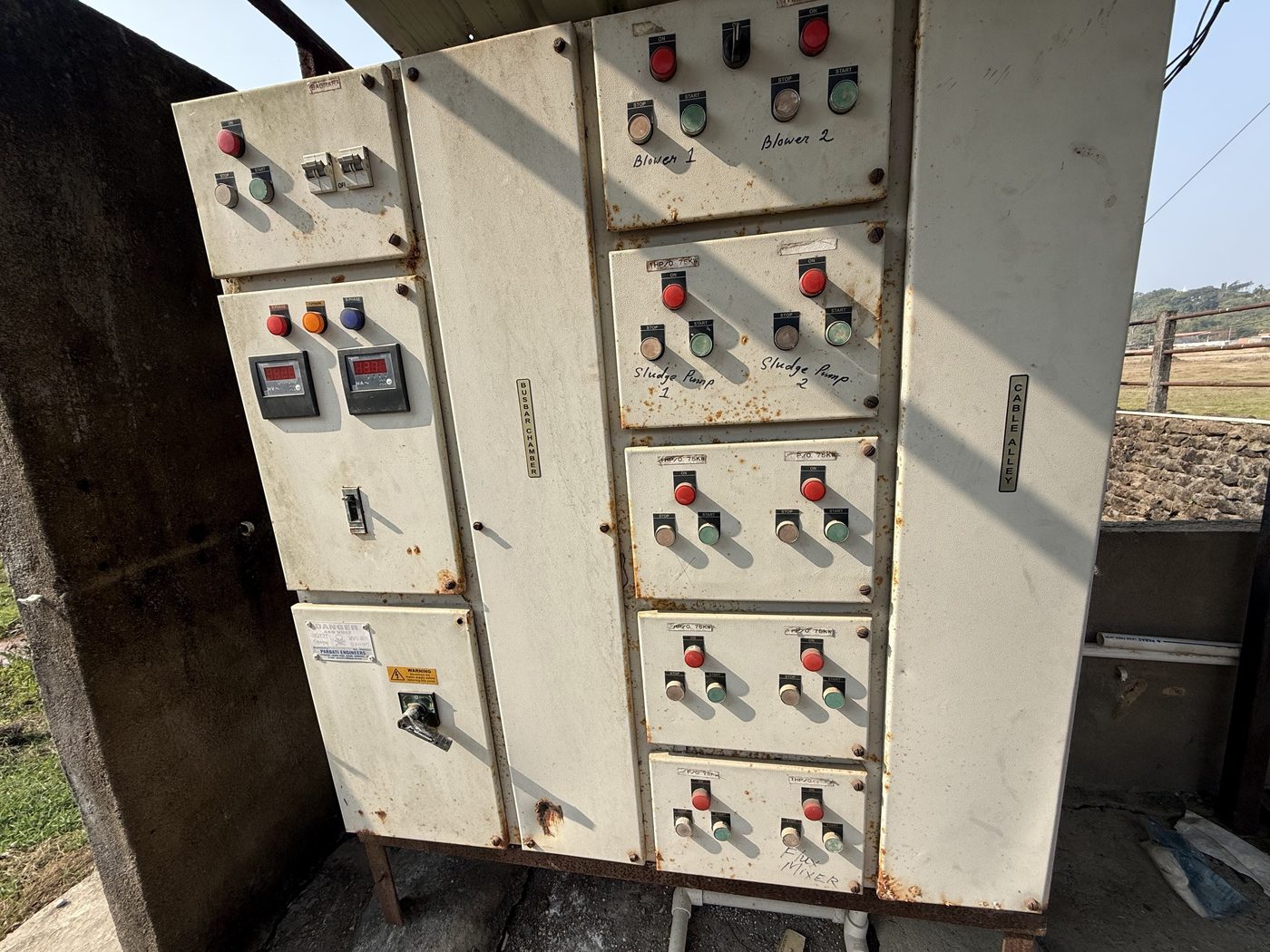
The plant's air blowers.
Air blowers
The plant's control panel.
Control panel
The finished plant seen from one corner.
Commissioned
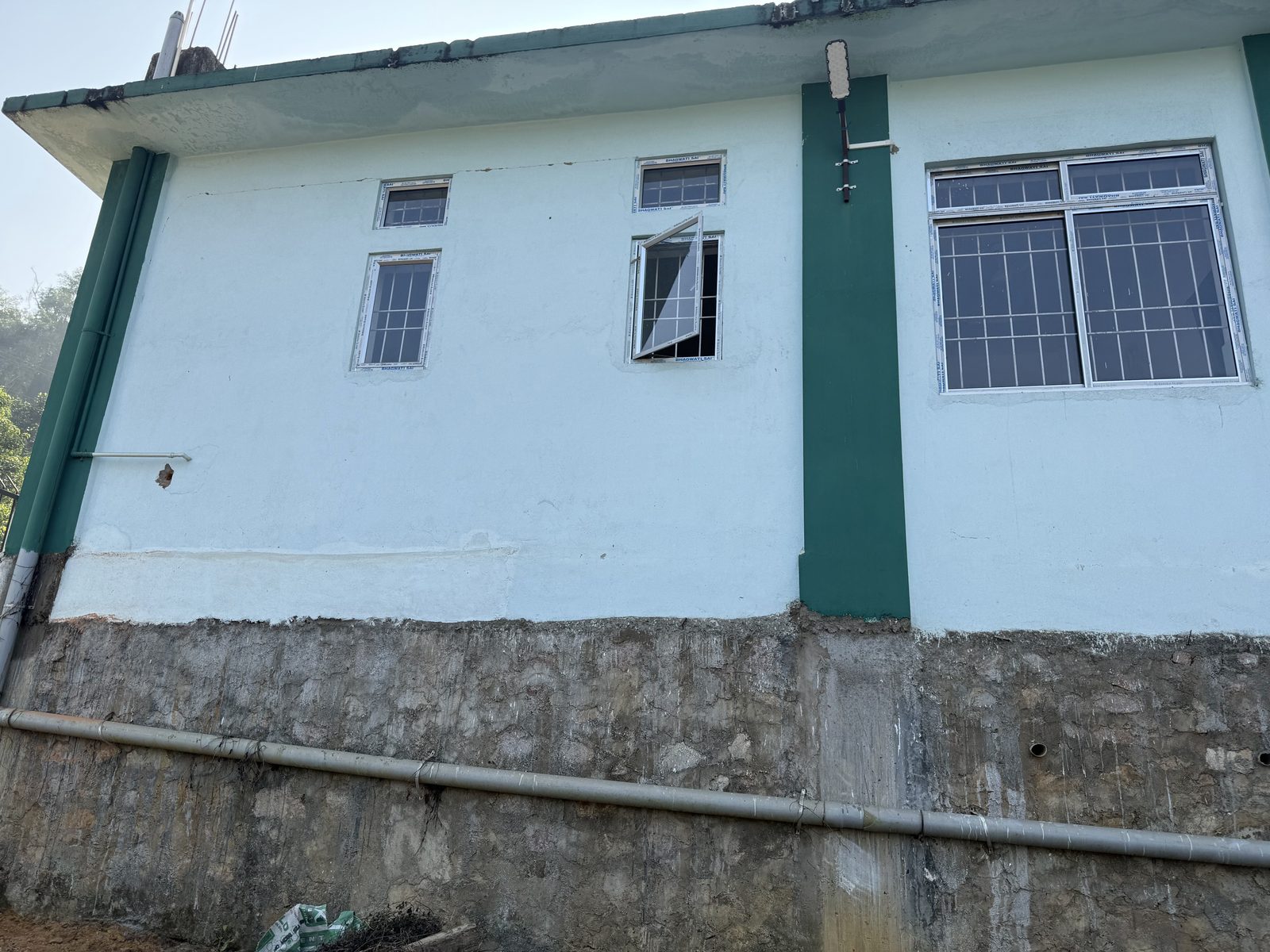
The hospital the plant serves.
The hospital it serves

What We Solve

Five Problems, Solved Where They Start.

Each solution uses technology already proven in Indian installations. We size it to your site, install it and maintain it.

Sewage Treatment · EcoTreat

Sewage Treated Where It's Made, and the Water Put Back to Use.

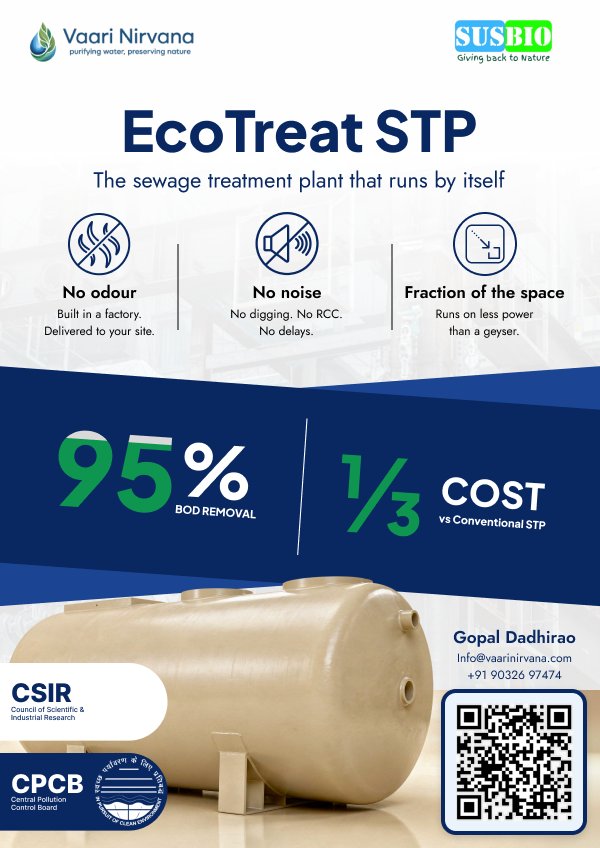
EcoTreat is a compact, factory-built sewage treatment plant that stands on a small skid, above or below ground. It treats the sewage from a hospital, school, campus or housing block on the same site, and returns water clean enough for flushing, gardening and washing.

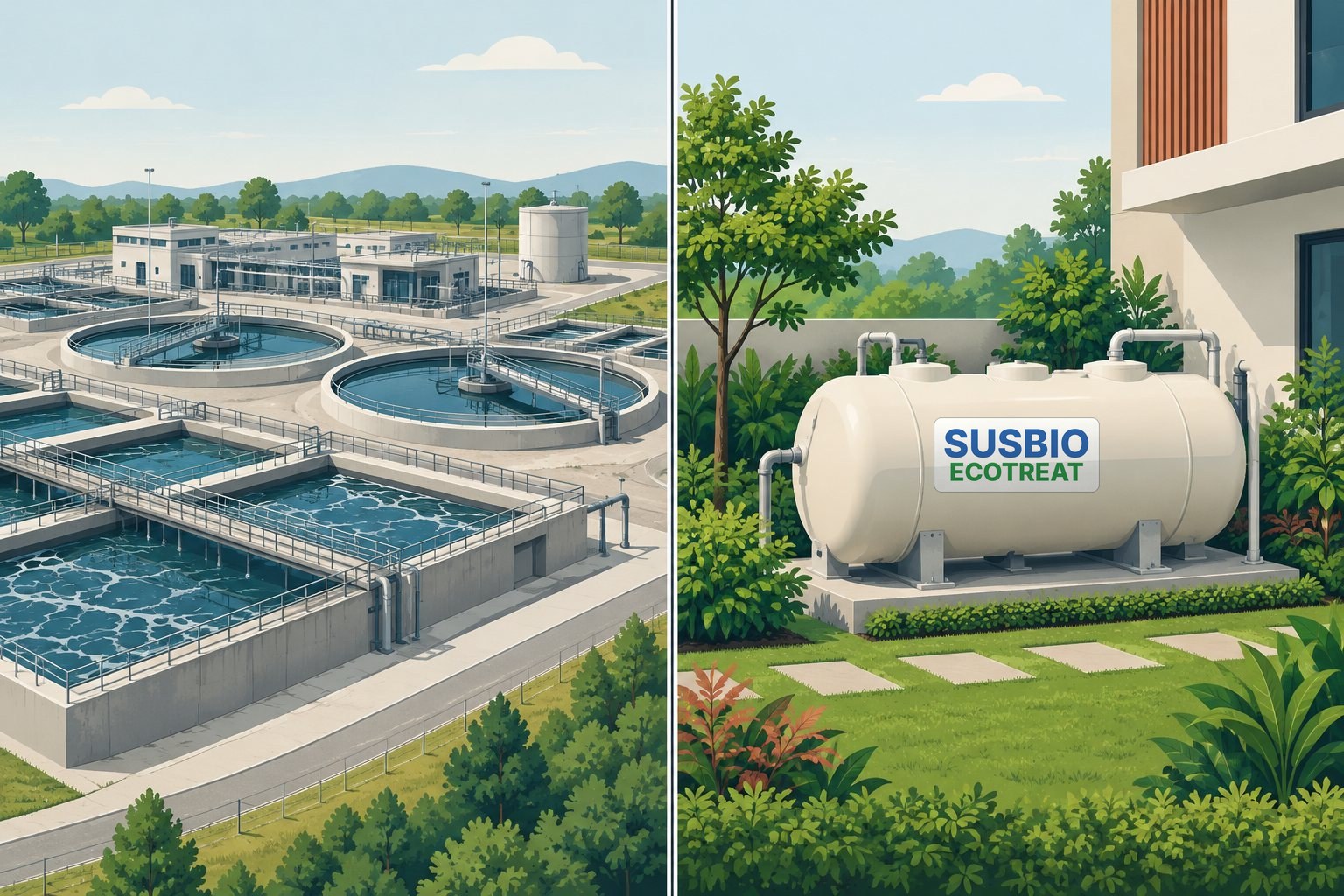
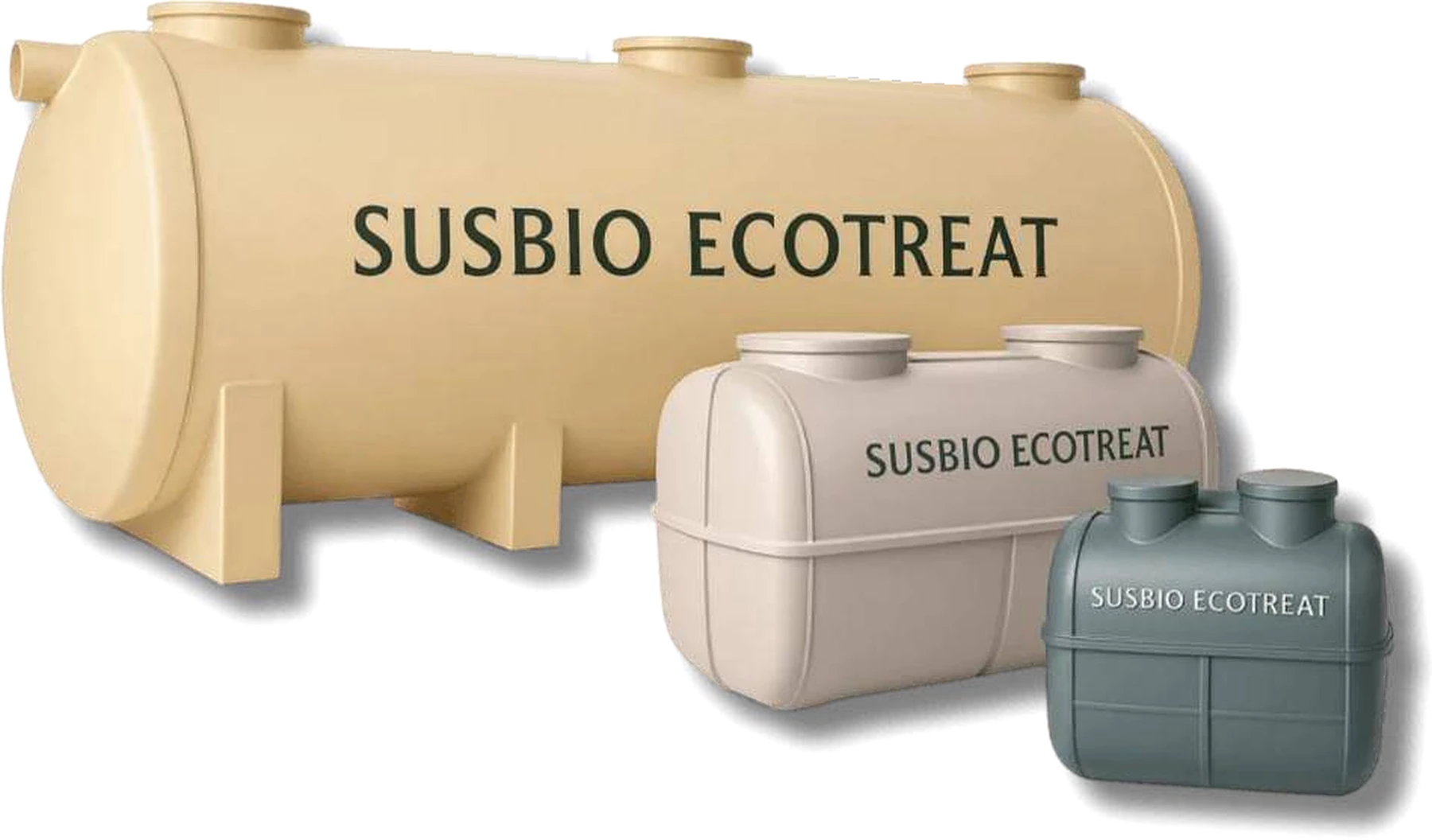
SUSBIO EcoTreat packaged sewage treatment plants in three sizes, each marked SUSBIO EcoTreat.

At a glance

Treats
Sewage from toilets, kitchens and washing
Capacity
1 to 150 KLD per site; larger flows with units in parallel (SUSBIO)
Space
About 0.6 m² per KLD (about 15 m² for 25 KLD), above or below ground
Site needs
A power supply and road access for occasional sludge removal
Water out
For reuse that isn't drinking: flushing, gardens, washing. Met NGT 2019 discharge standards in independent testing

What it achieves

<8mg/L BOD
Typical outlet. Limit: 10 mg/L
Water to use again
₹6.3per kL
Energy and chlorine, measured by CSIR-NIIST
35dB
Blower noise, measured by CSIR-NIIST

CSIR-NIIST performance evaluation of a 2 KLD EcoTreat unit at Thiruvananthapuram, monitored March to April 2026 (report, June 2026): average outlet BOD 8.25, COD 35.5 and TSS 15 mg/L, within NGT 2019 standards; running cost excludes labour. Results apply to the conditions described in the report. Typical BOD and capacity range from SUSBIO. Read the Full Report

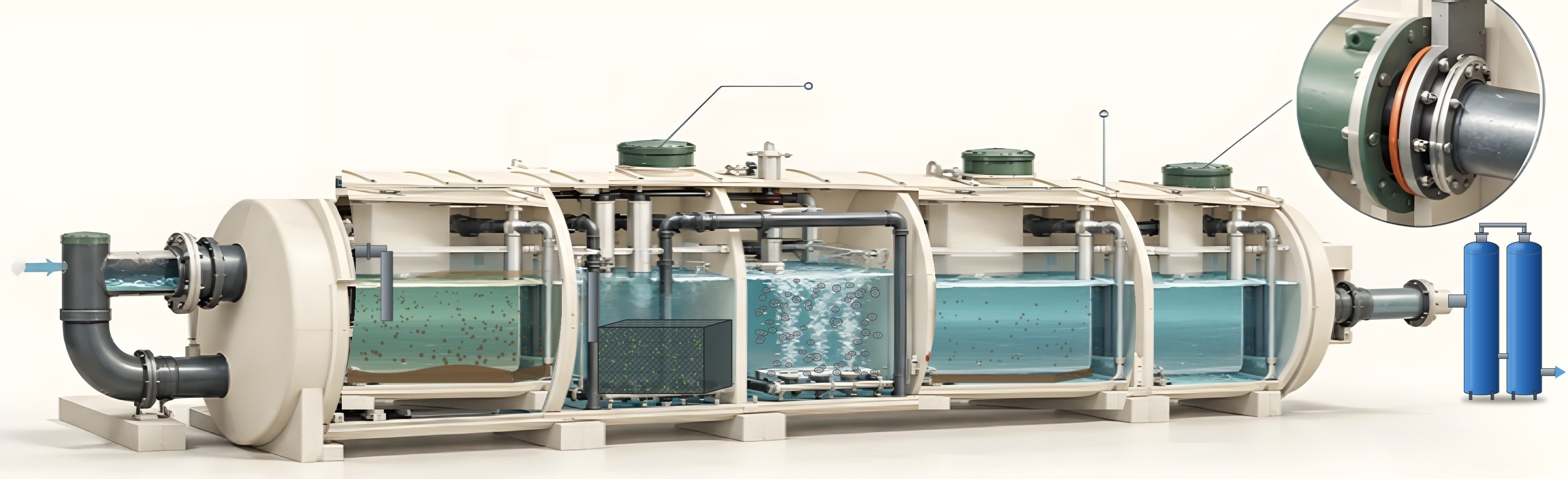
See What Happens Inside

Four chambers in one tank, then disinfection and filtration. Select a stage to see what it does.

Explore the Plant in 3D
Illustrated cutaway of an EcoTreat tank with three access lids: sedimentation, anaerobic media, aeration and second sedimentation chambers, a chlorine box, then two blue pressure filters.

Already at work elsewhere: EcoTreat also treats sewage at GAET School, Goa; Pune Metro; a hospital in Kolhapur; and Zoho's campus, Tamil Nadu. These plants were installed by SUSBIO.

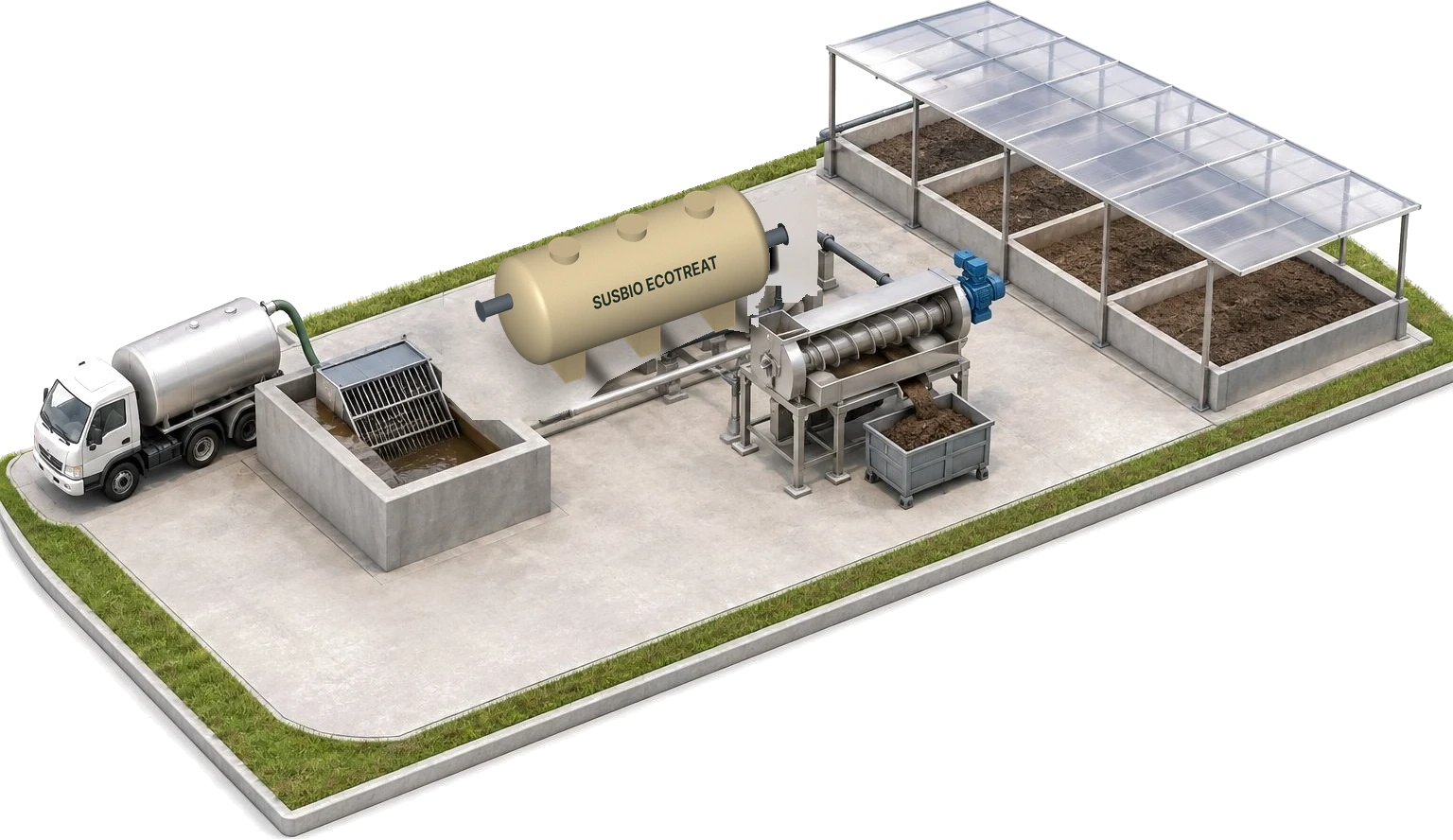
3D concept model of a faecal sludge treatment plant: a desludging truck unloading at the receiving station, a SUSBIO EcoTreat tank treating the liquid, a screw press and covered drying beds.

Faecal Sludge Treatment

Septic Tank Sludge, Given a Safe Place to Go.

In unsewered towns, septic tanks accumulate sludge that is often emptied into drains, fields and streams. A faecal sludge treatment plant (FSTP) receives this sludge from desludging tankers, separates solids from liquid and treats both, so pathogens and nutrients no longer reach land and water.

At a glance

Treats
Sludge emptied from septic tanks and pit latrines
Capacity
Typically 10 to 15 KLD of sludge for a block-level town
Site needs
Road access for desludging tankers, a power supply and about 85 m² (900 sq ft) of land for a 10 KLD plant
Outputs
Treated water for non-potable reuse or discharge within pollution-control board limits; dried sludge for co-composting or soil conditioning after pathogen testing

What it achieves

Sludge treated, not dumped
Safer water around the town
A sanitation chain that works
Local jobs

In development: an FSTP for Ampati, South West Garo Hills, Meghalaya. The detailed project report has been submitted.

Water Conservation

Less Fresh Water Flushed Away. More Rain Kept.

The cheapest water is the water you never have to draw. Two simple systems cut the demand on your supply from the first day.

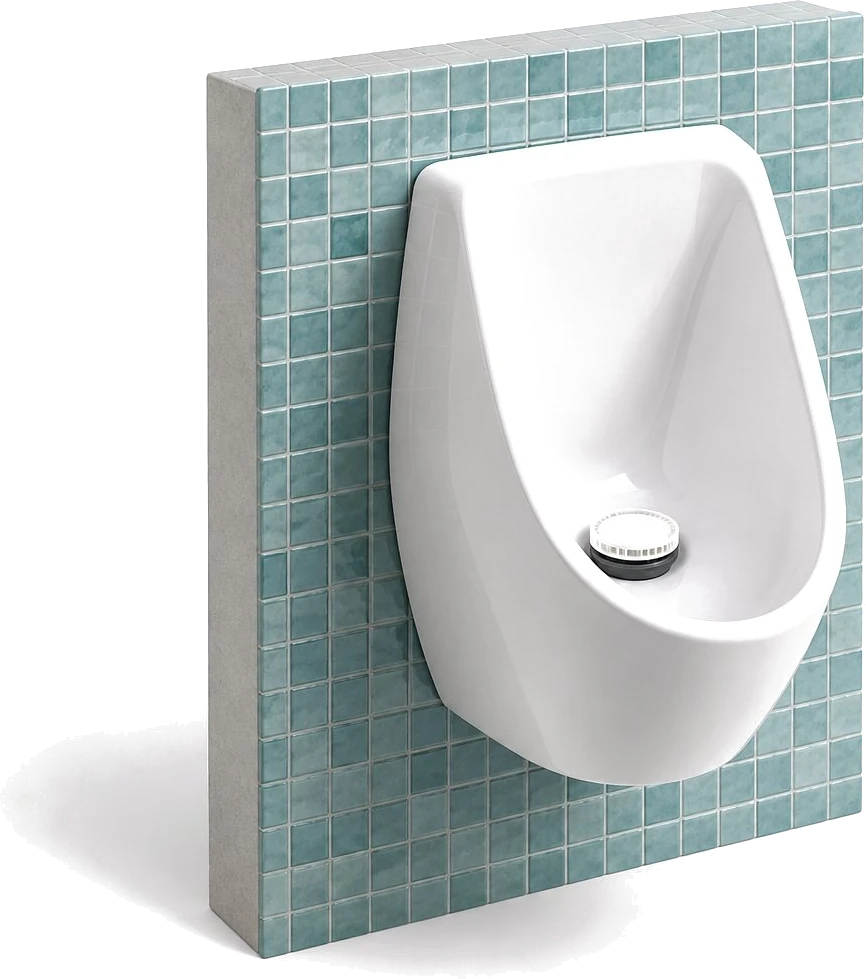
3D concept model of a waterless urinal mounted on a tiled wall.

Waterless Urinals · Zerodor

Urinals That Save Water from the Very First Use.

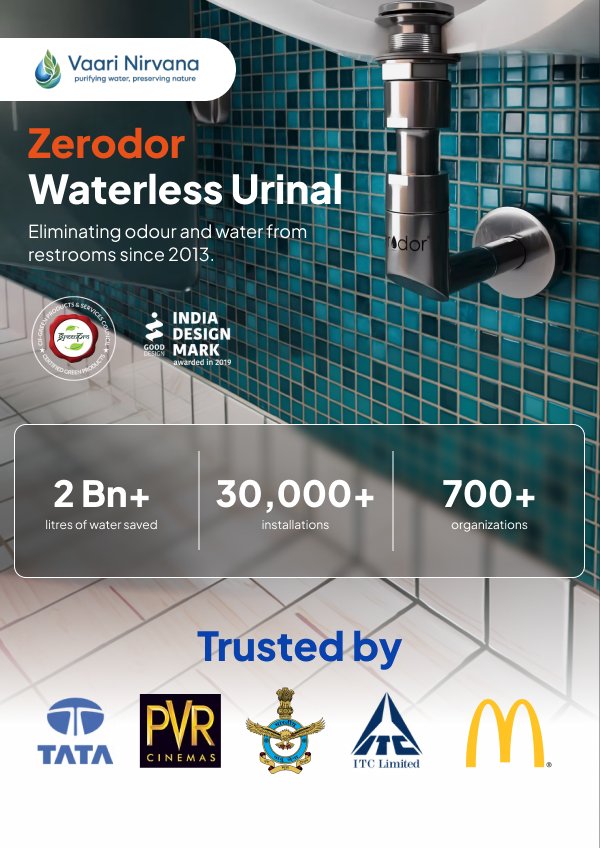
Zerodor urinals need no flush at all. A one-way mechanical valve opens under urine flow and closes to block ammonia gas from the drain line. No water, cartridge or chemicals.

At a glance

Fits
New washrooms, and existing urinals converted with a retrofit kit that replaces the waste coupling
Site needs
No water line to the urinal, no electricity
Upkeep
Daily cleaning and a 15-minute deep clean twice a week. No cartridge to replace

What it achieves

0litres a flush
No flush water at all
Up to1,70,000litres
Saved per urinal a year
Fewer things to fix
~6months
Pays for itself quickly

Figures from Zerodor (Ekam Eco Solutions) product information. Zerodor is India's first Green Pro-certified waterless urinal.
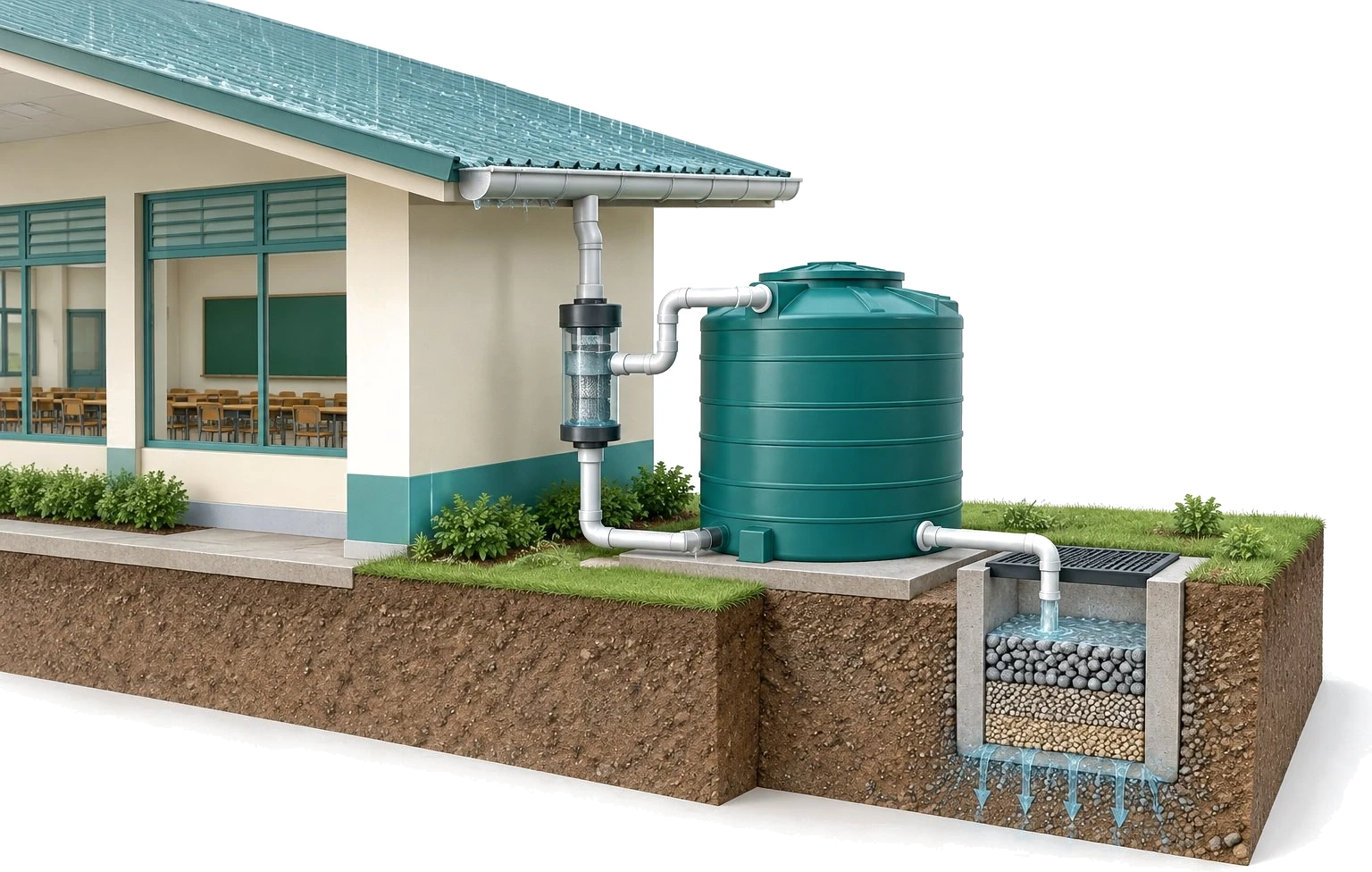
3D concept section of a school roof draining into a storage tank, with a filter and a recharge pit in the ground.

Rainwater Harvesting

Rain Captured and Stored, Not Lost to the Drain.

Rain falling on your roofs and paved areas is collected, filtered and stored for use around the site, or sent back into the ground to recharge it.

At a glance

Collects from
Roofs and paved surfaces
Uses
Stored for non-drinking use, or recharged into the ground
Sized to
Your roof area and the local rainfall record

What it achieves

Less reliance on borewells and tankers
Groundwater recharged
Less runoff and waterlogging
Water from your own roof

How much depends on your roof area and the local rainfall. We calculate it for your site.

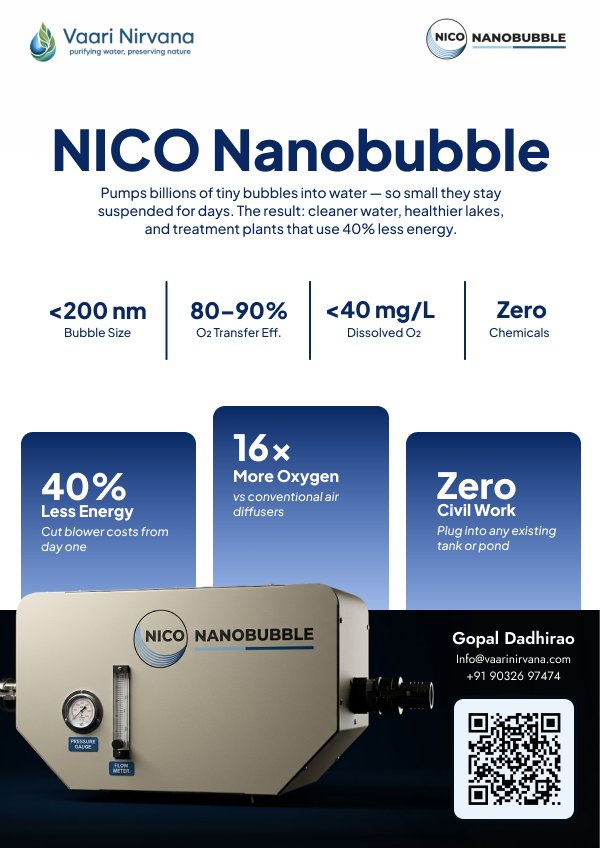
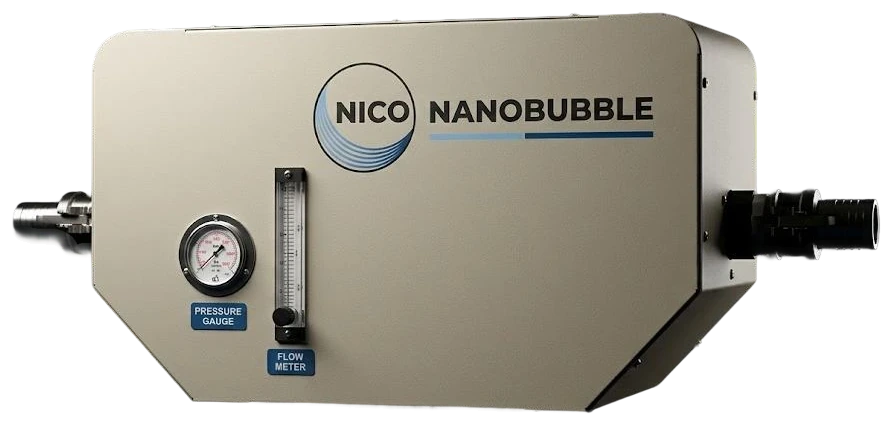
The NICO nanobubble generator, with its pressure gauge, flow meter and inlet and outlet couplings.

Lakes and Rivers · NICO Nanobubble Aeration

Polluted Lakes and Ponds, Given the Oxygen to Recover.

Oxygen-depleted lakes and ponds develop odour, algal blooms and fish kills. A nanobubble generator dissolves air, oxygen or ozone as bubbles of 50 to 200 nm, which stay suspended instead of rising to the surface. Higher dissolved oxygen supports aerobic breakdown of organic load and suppresses algae. Every project starts with baseline testing.

At a glance

Equipment
NICO VYOM for lakes and ponds; NICO VARUNA for sewage and drains
Site needs
A power supply; floating or bank-mounted, with minimal civil work
Measured by
Dissolved oxygen, BOD, COD, ammonia, nitrate, total phosphorus, turbidity, chlorophyll-a and odour, against a pre-treatment baseline

What it achieves

More oxygen in the water
Less odour and algae
0chemicals
A chemical-free process
>85%gas transfer
Efficient oxygen transfer (NICO)

Equipment figures from NICO Nanobubble India product information. NICO's own references include Manchikere Lake, Karnataka, and the Krishna Matha temple pond, Udupi. Results at each site depend on what flows into the water.

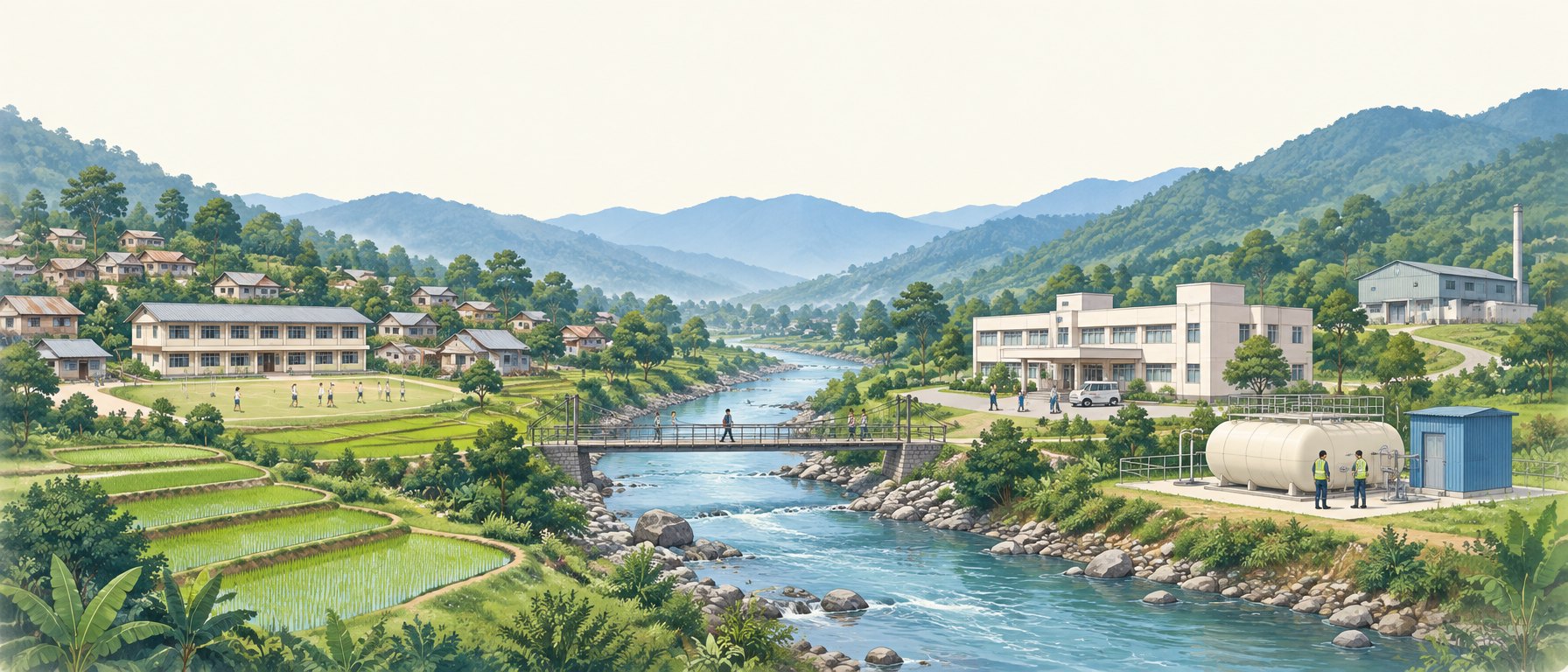
We are in discussions on our first restoration projects. If you are responsible for a lake, pond or river stretch, we would welcome the chance to assess it.

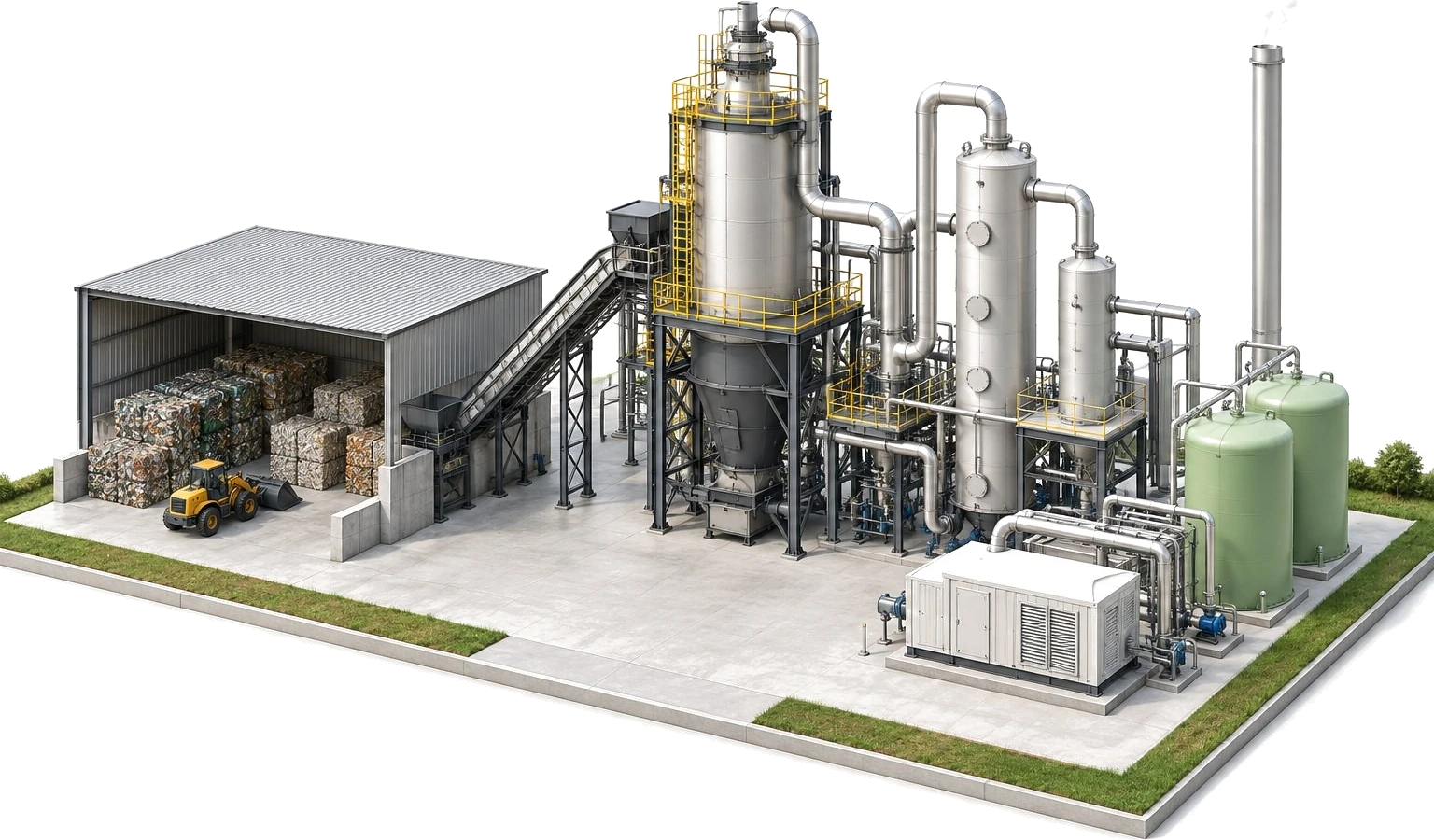
3D concept model of a waste processing plant: a covered sorting shed, a conveyor and processing towers with storage tanks.

Waste to Resource

Solid Waste Turned into Energy and Materials, Not Left in a Dump.

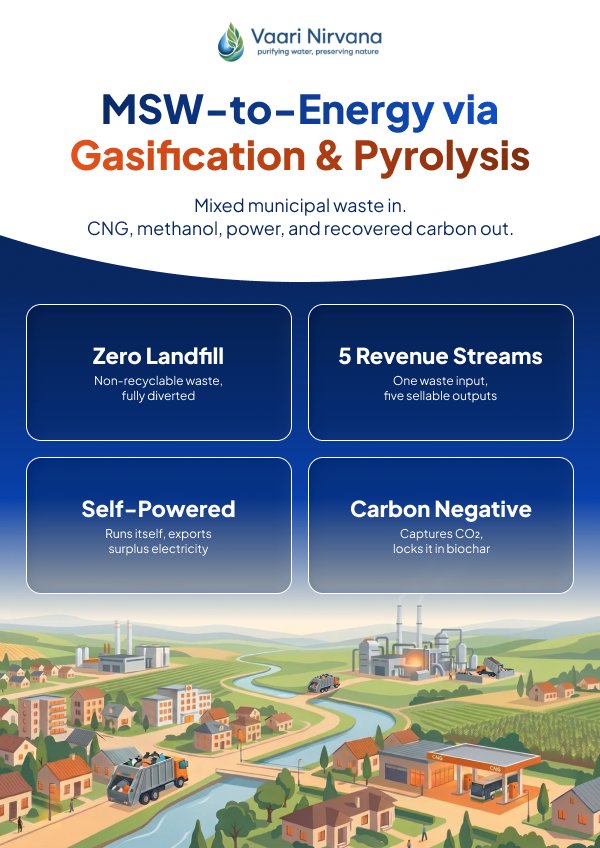
Mixed waste piling up at the edge of town is a health risk and a lost resource. We start by studying what your waste is made of, then recommend processing that recovers value from it: gasification turns household waste into syngas and electricity, and bamboo can be converted into activated charcoal.

At a glance

Starts with
A study of what the waste is, how much there is and how it is collected
Recovers
Syngas, electricity, slag and metals from gasification of household waste; activated charcoal from bamboo
Site needs
Set by the waste study: typically covered feedstock storage, a processing shed, three-phase power and truck access

What it achieves

Waste kept out of open dumps and landfill
Something useful in return
Healthier surroundings

How much can be recovered depends on what the waste contains. The waste study tells us before anything is built.

In planning: a 10 TPD demonstration plant to convert mixed Meghalaya bamboo into activated charcoal, with CPCB-compliant emissions control from commissioning.

Also offered. Running an industrial site? We also plan effluent treatment around what your process discharges.

Effluent Treatment

How We Work

From the First Site Visit to Every Year After.

No work starts before the paperwork, and no system is left without someone responsible for it.

See How We Work

01

Inspection

1 of 7

Who We Work With

For Public Bodies and Private Owners Alike.

Government and Public Bodies

Health departments, urban local bodies and municipal boards, state development authorities, rural development and sanitation departments, pilgrimage-route administrations and public institutions. We work within your approvals process and keep the paperwork clear from the first visit. Our first plant, at Baghmara, was built for Meghalaya's Health and Family Welfare Department.

See the Baghmara Project

Private and Institutional Owners

Hospitals, schools, colleges and hostels, campuses, hotels and resorts, temple and pilgrimage trusts, developers, industrial sites and food-processing sites such as abattoirs. Systems sized to your site, your budget and your reuse goals, with maintenance that does not depend on your own staff.

Discuss Your Site

Planning a community project through CSR, a foundation or a programme funded by a development agency? Talk to Us About It

Why Vaari Nirvana

Proven Technology. Local Hands. Long-Term Care.

Technology That Already Works

We partner with makers whose systems are already running across India: SUSBIO reports over 500 EcoTreat installations in 24 states, and Zerodor over 30,000 installations. Every system is proven elsewhere before it reaches your site.

SUSBIONICO Nanobubble

Built and Run by Local People

We hire and train local workers to build and maintain each system, so the skills and the jobs stay where the system serves.

Responsible After Handover

Maintenance is planned before installation begins. You always know who to call, and they know your system.

Every working plant is one less drain running into a river.

Tell Us About Your Site.

New Project

Planning Something New?

Share the location, the problem and what you would like to achieve. We will come back with the right next step, usually a site visit.

Discuss Your Project

Existing System

Already Have a System?

Tell us what it is, where it is and what it needs. We will arrange a service visit or a maintenance plan.

Request Service

Prefer to talk? +91 90326 97474 · +91 91771 89977 · WhatsApp · shakti@vaarinirvana.com · swathi@vaarinirvana.com